History of New Media is an overview of the pioneering artists and scientists who have brought about the dissolution of boundaries that have traditionally existed between the artistic and technological disciplines. The course will survey the work and ideas of artists who have explored new interactive and interdisciplinary forms, as well as engineers and mathematicians who have developed information technologies and influential scientific and philosophical ideologies that have influenced the arts.This broad historical analysis will help illuminate an understanding of the emerging digital arts and its aesthetics, strategies, trends, and socio-cultural aspirations. Central to this analysis will be an understanding of key concepts for the interpretation of evolving multimedia forms. Students will develop commentary in the form of critical projects through the in-depth analysis of historical trends and seminal work in the media arts and information sciences. This volume is premised on the belief that media and history are so intimately connected that the emergence of what can be called ‘new media’ does something more than merely provide us with new media whose histories can be described. The history of new media challenges us to: become more reflexive in our understanding of how history operates, reconsider the meaning of ‘newness’ as it relates to media and to broader themes in historical thought, reflect on how media operate in terms of information recording and storage, approach social thought with a renewed sense of how the theoretical relates to the historical, and contextualize what is taken as new so as to establish broader and suggestive continuities in the history of communication.
In the 1950s, connections between computing and radical art began to grow stronger. It was not until the 1980s that Alan Kay and his co-workers at Xerox PARC began to give the computability of a personal computer to the individual, rather than have a big organization be in charge of this. “In the late 1980s and early 1990s, however, we seem to witness a different kind of parallel relationship between social changes and computer design. Although causally unrelated, conceptually it makes sense that the Cold War and the design of the Web took place at exactly the same time.
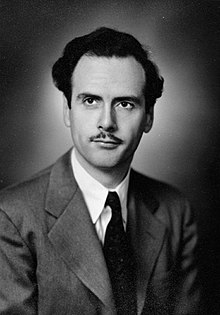
Writers and philosophers such as Marshall McLuhan were instrumental in the development of media theory during this period. His now famous declaration in Understanding Media: The Extensions of Man (1964) that “the medium is the message” drew attention to the too often ignored influence media and technology themselves, rather than their “content,” have on humans’ experience of the world and on society broadly.
Until the 1980s media relied primarily upon print and analog broadcast models, such as those of television and radio. The last twenty-five years have seen the rapid transformation into media which are predicated upon the use of digital technologies, such as the Internet and video games. However, these examples are only a small representation of new media. The use of digital computers has transformed the remaining ‘old’ media, as suggested by the advent of digital television and online publications. Even traditional media forms such as the printing press have been transformed through the application of technologies such as image manipulationsoftware like Adobe Photoshop and desktop publishing tools.

Andrew L. Shapiro (1999) argues that the “emergence of new, digital technologies signals a potentially radical shift of who is in control of information, experience and resources” (Shapiro cited in Croteau and Hoynes 2003: 322). W. Russell Neuman (1991) suggests that whilst the “new media” have technical capabilities to pull in one direction, economic and social forces pull back in the opposite direction. According to Neuman, “We are witnessing the evolution of a universal interconnected network of audio, video, and electronic text communications that will blur the distinction between interpersonal and mass communication and between public and private communication” (Neuman cited in Croteau and Hoynes 2003: 322).
- Alter the meaning of geographic distance.
- Allow for a huge increase in the volume of communication.
- Provide the possibility of increasing the speed of communication.
- Provide opportunities for interactive communication.
- Allow forms of communication that were previously separate to overlap and interconnect.
Consequently, it has been the contention of scholars such as Douglas Kellner and James Bohman that new media, and particularly the Internet, provide the potential for a democratic postmodern public sphere, in which citizens can participate in well informed, non-hierarchical debate pertaining to their social structures. Contradicting these positive appraisals of the potential social impacts of new media are scholars such as Ed Herman and Robert McChesney who have suggested that the transition to new media has seen a handful of powerful transnational telecommunications corporations who achieve a level of global influence which was hitherto unimaginable.
Scholars, such as Lister et al. (2003), have highlighted both the positive and negative potential and actual implications of new media technologies, suggesting that some of the early work into new media studies was guilty of technological determinism – whereby the effects of media were determined by the technology themselves, rather than through tracing the complex social networks which governed the development, funding, implementation and future development of any technology.
Based on the argument that people have a limited amount of time to spend on the consumption of different media, Displacement theory argue that the viewership or readership of one particular outlet leads to the reduction in the amount of time spent by the individual on another. The introduction of New Media, such as the internet, therefore reduces the amount of time individuals would spend on existing “Old” Media, which could ultimately lead to the end of such traditional media.

 The History of New Media